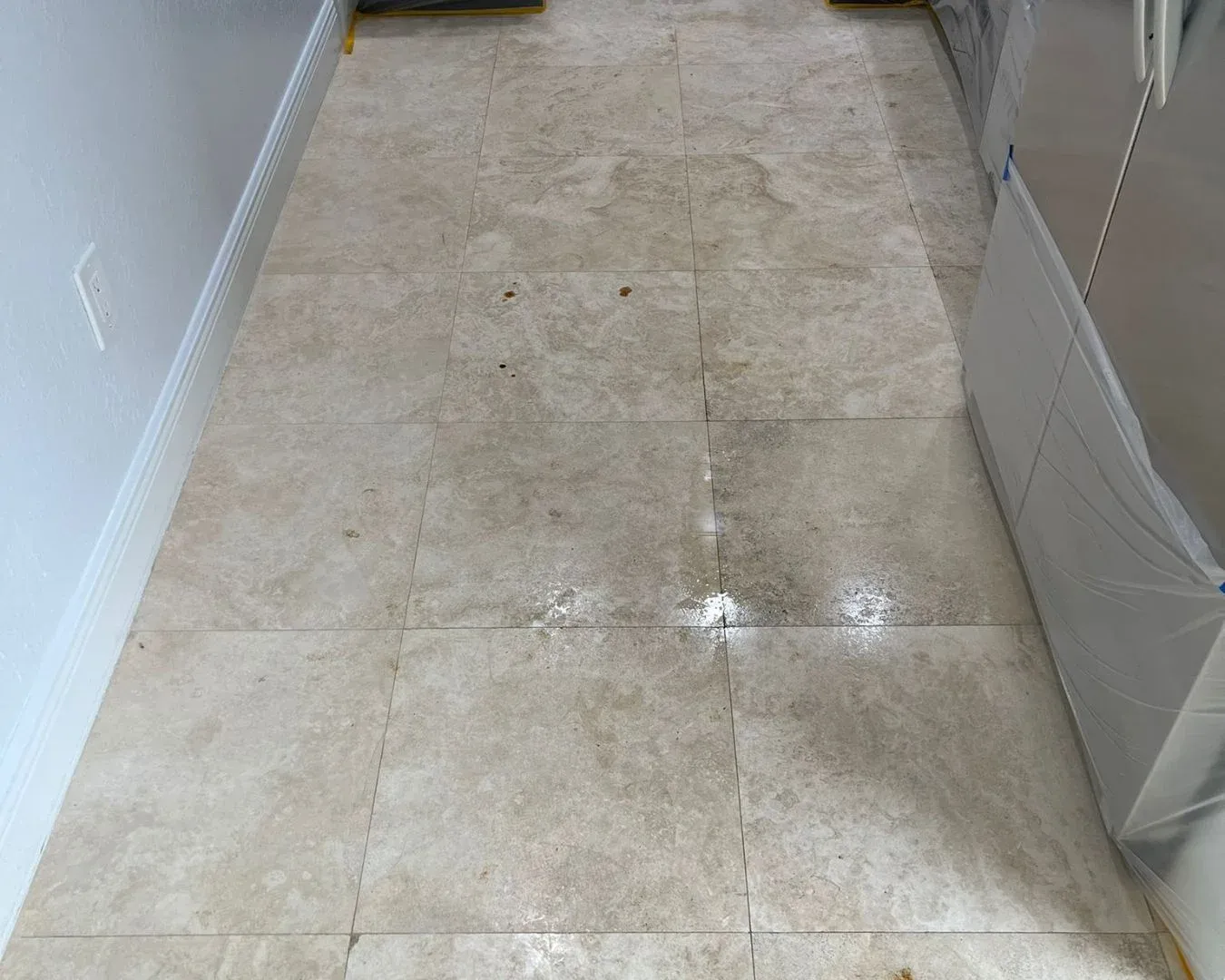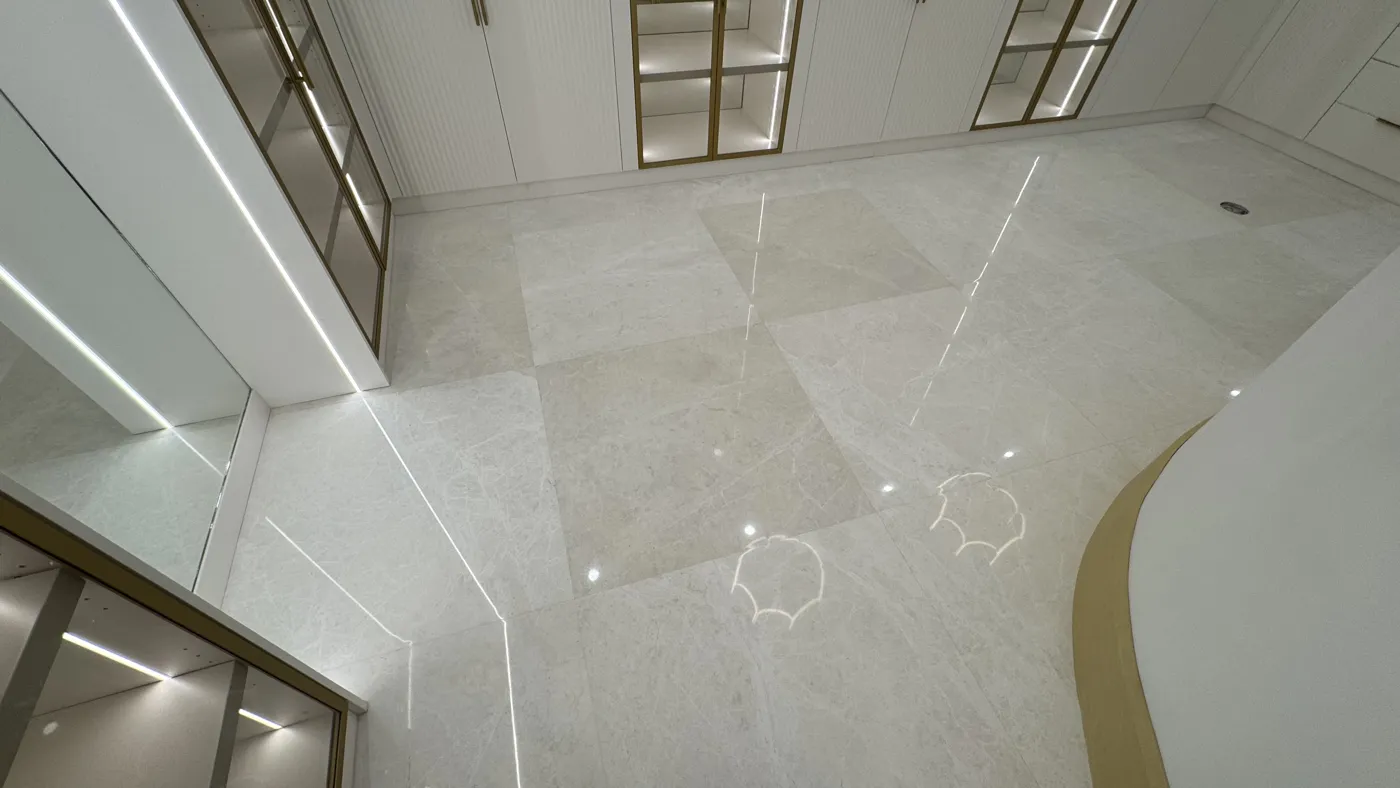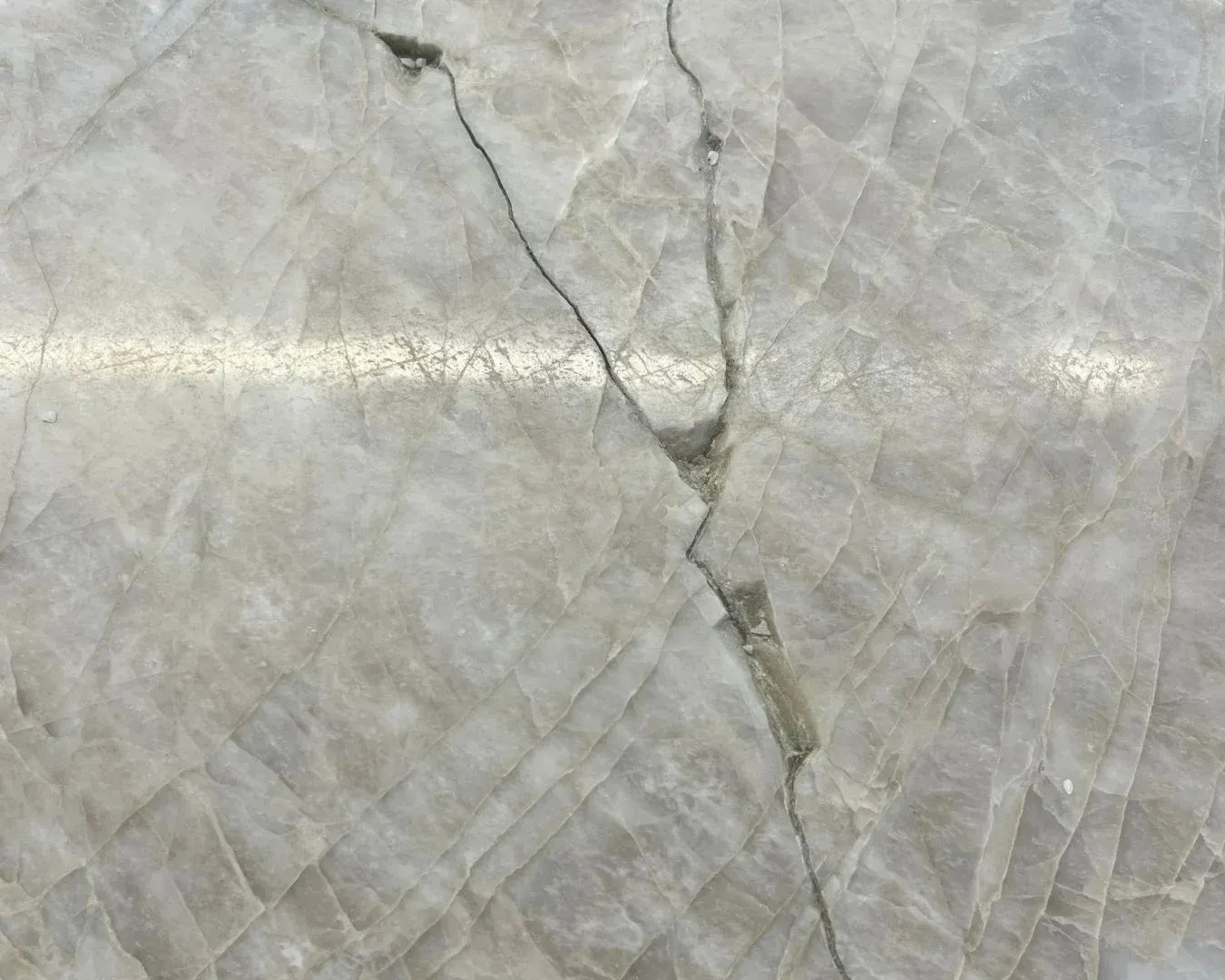
Clean a marble shower with warm water, a soft cloth or brush and a pH-neutral cleaner made for natural stone, then squeegee and dry it after each use. Never use vinegar, lemon, bleach, ammonia or descaling products on marble, because they etch the surface. Hard water film and mildew that will not come off with gentle cleaning should be removed by a stone restoration professional, not with acids.
A simple daily routine
- Rinse the walls and floor with warm water after showering.
- Squeegee the walls and glass, starting from the top.
- Wipe the floor and corners with a microfiber cloth so water does not sit in the grout.
- Keep the bathroom ventilated: run the fan for 20 to 30 minutes.
This takes about a minute and prevents most soap scum, mineral spots and mildew from building up in the first place.
Weekly cleaning
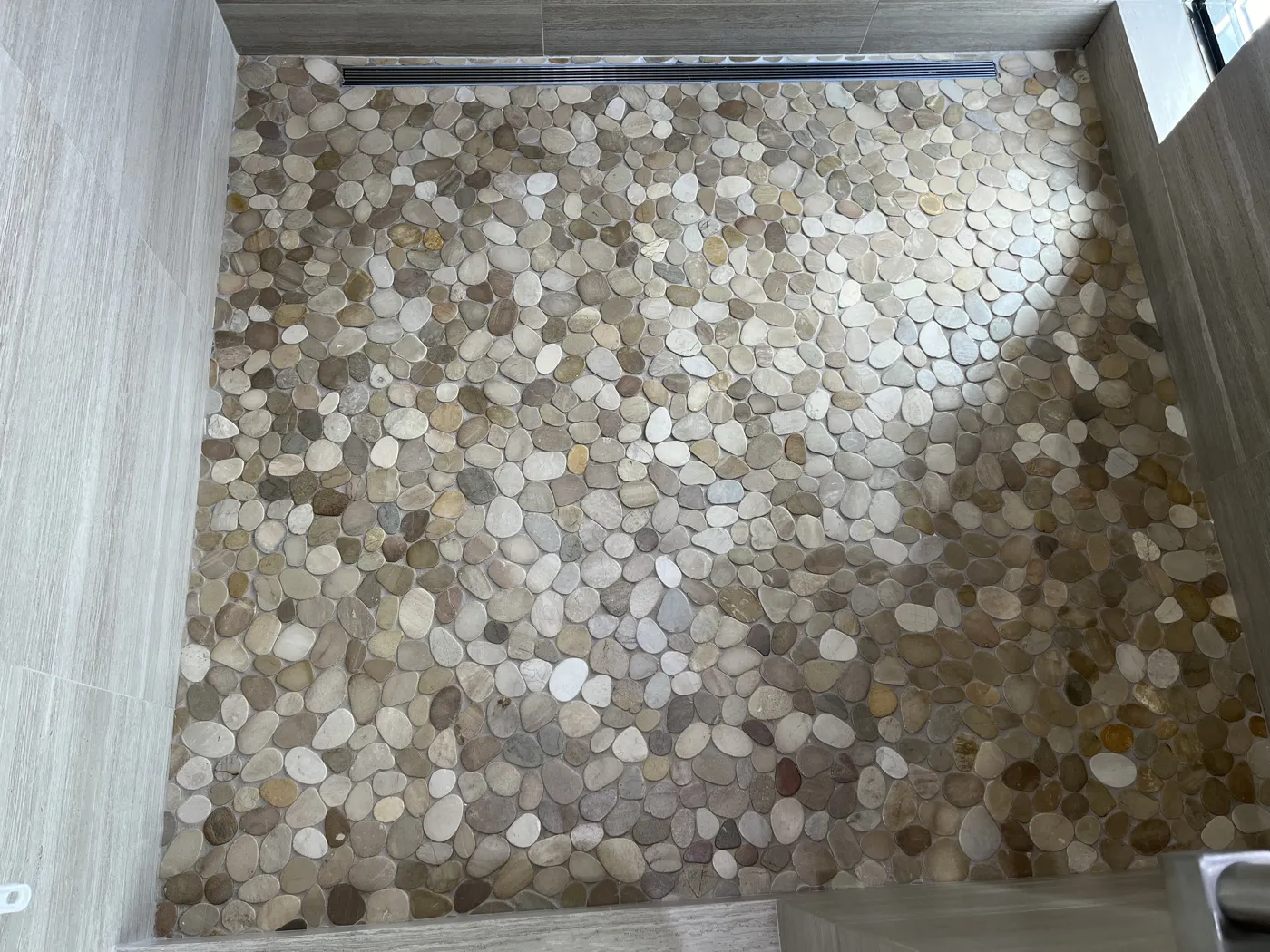
Once a week, spray a pH-neutral stone cleaner, let it sit for a minute, scrub gently with a soft brush (especially grout lines and pebble floors) and rinse well. Dry with a towel or squeegee. Choose products labeled safe for marble or natural stone.
Products to avoid
- Vinegar, lemon and any "natural" acidic cleaner
- Bleach and ammonia on a regular basis
- Lime, calcium and rust removers and descalers
- Abrasive powders and scouring pads
- All-purpose bathroom sprays that do not mention stone
These products can etch marble in seconds, leaving dull, rough patches that trap even more soap and minerals.
Hard water and soap scum in Florida
Much of Florida has hard water, so white mineral film is one of the most common shower complaints we see. On ceramic tile, people use acidic descalers. On marble, that same product causes etching. Light film can be reduced with a stone-safe soap scum remover and patience. Heavy buildup needs to be removed mechanically and the finish restored, which is part of our shower restoration service.
Mildew in grout and pebble floors
Humidity makes grout and pebble floors prone to mildew. Use a stone-safe mildew cleaner, scrub with a soft brush and rinse. Grout that stays dark after cleaning, or that is cracked or missing, should be deep cleaned and repaired so the joints are clean and properly finished again. Our tile and grout cleaning covers this, and in some showers regrouting or epoxy grout may be the better option.
See the pebble shower floor before and after for what a restored floor looks like.
Signs it is time for restoration
- Dull or rough patches that do not change with cleaning
- White film that comes back right after you clean
- Grout that stays dark, cracks or falls out
- Loose tiles or water stains outside the shower, which may point to a leak and should be checked quickly
Frequently asked questions
Can I use vinegar to clean a marble shower?
No. Vinegar is an acid and will etch marble, leaving dull, rough spots. Use a pH-neutral cleaner made for natural stone.
How do I remove hard water stains from a marble shower?
Try a stone-safe soap scum remover first. Heavy mineral buildup on marble should be removed by a professional with mechanical methods, followed by refinishing, instead of acidic descalers.
How often should a marble shower be sealed?
It depends on the stone and how much it is used. If water darkens the stone within a few minutes, it is time to reseal.