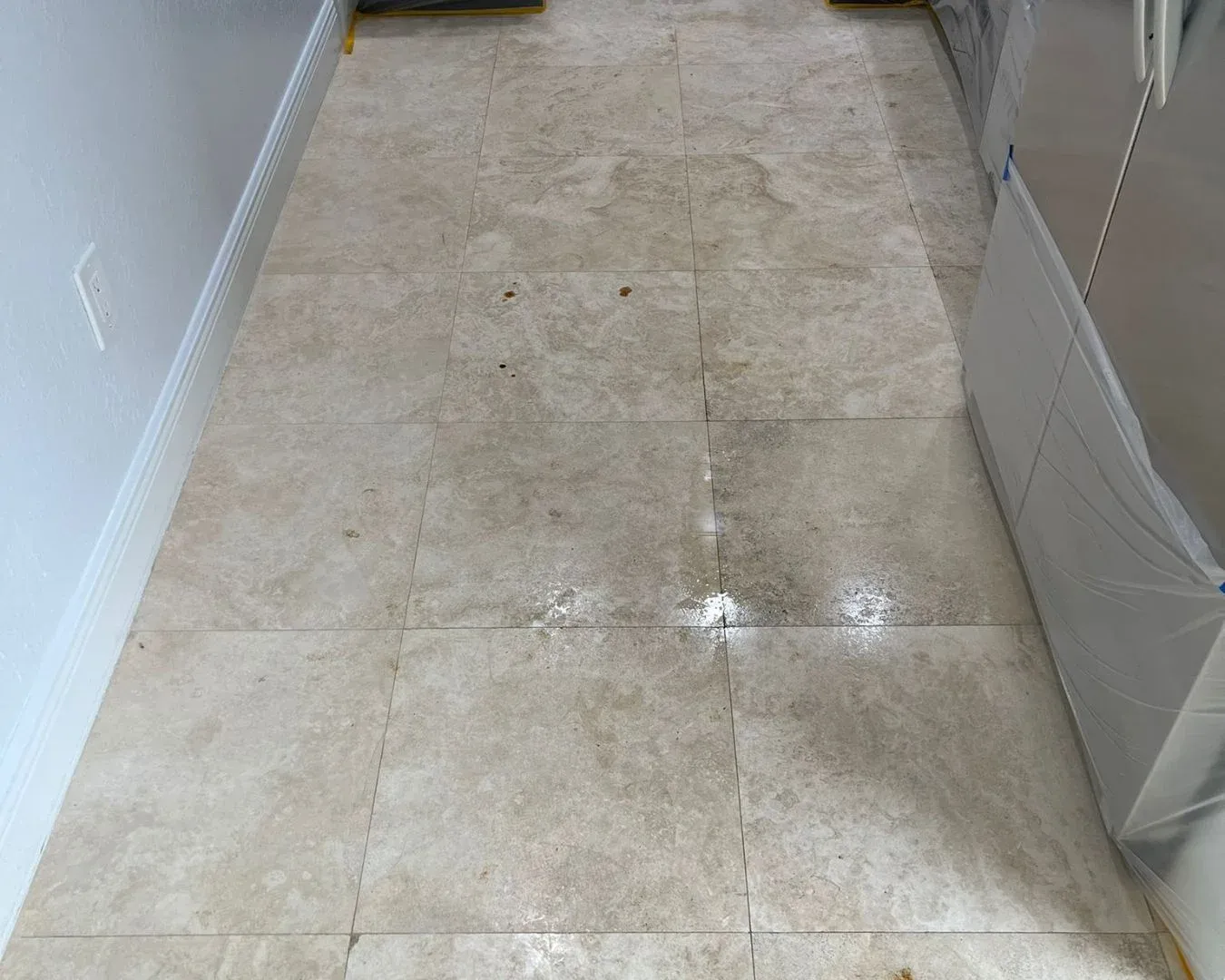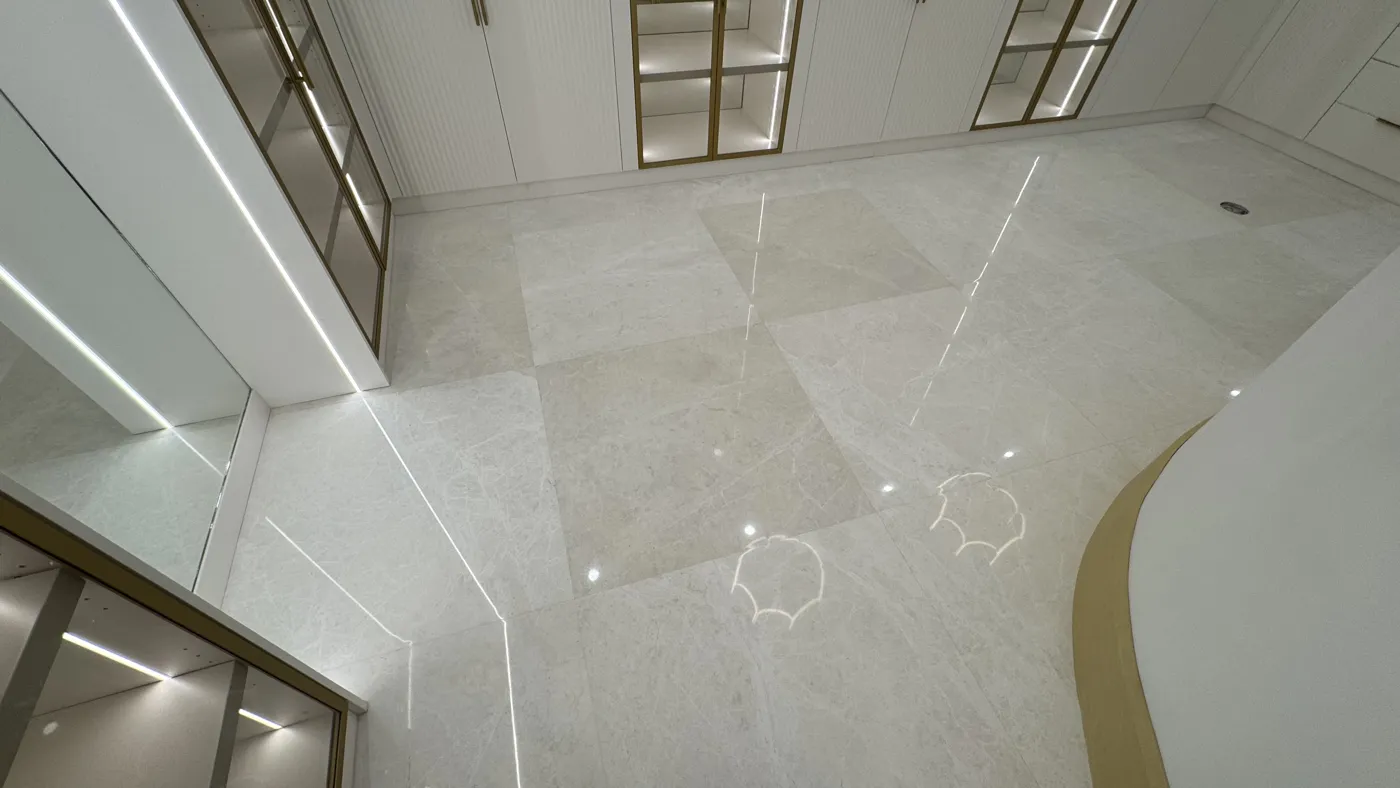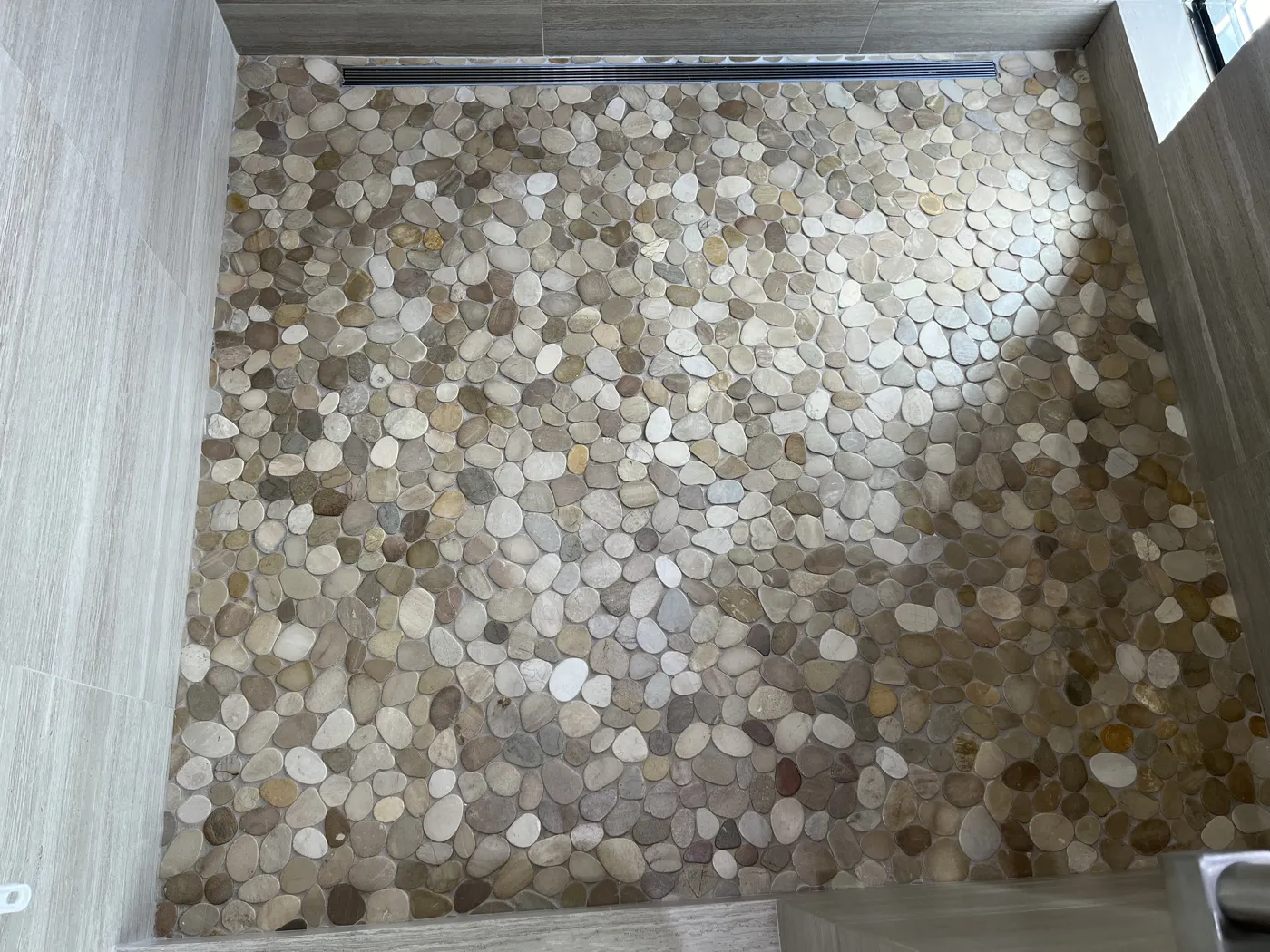
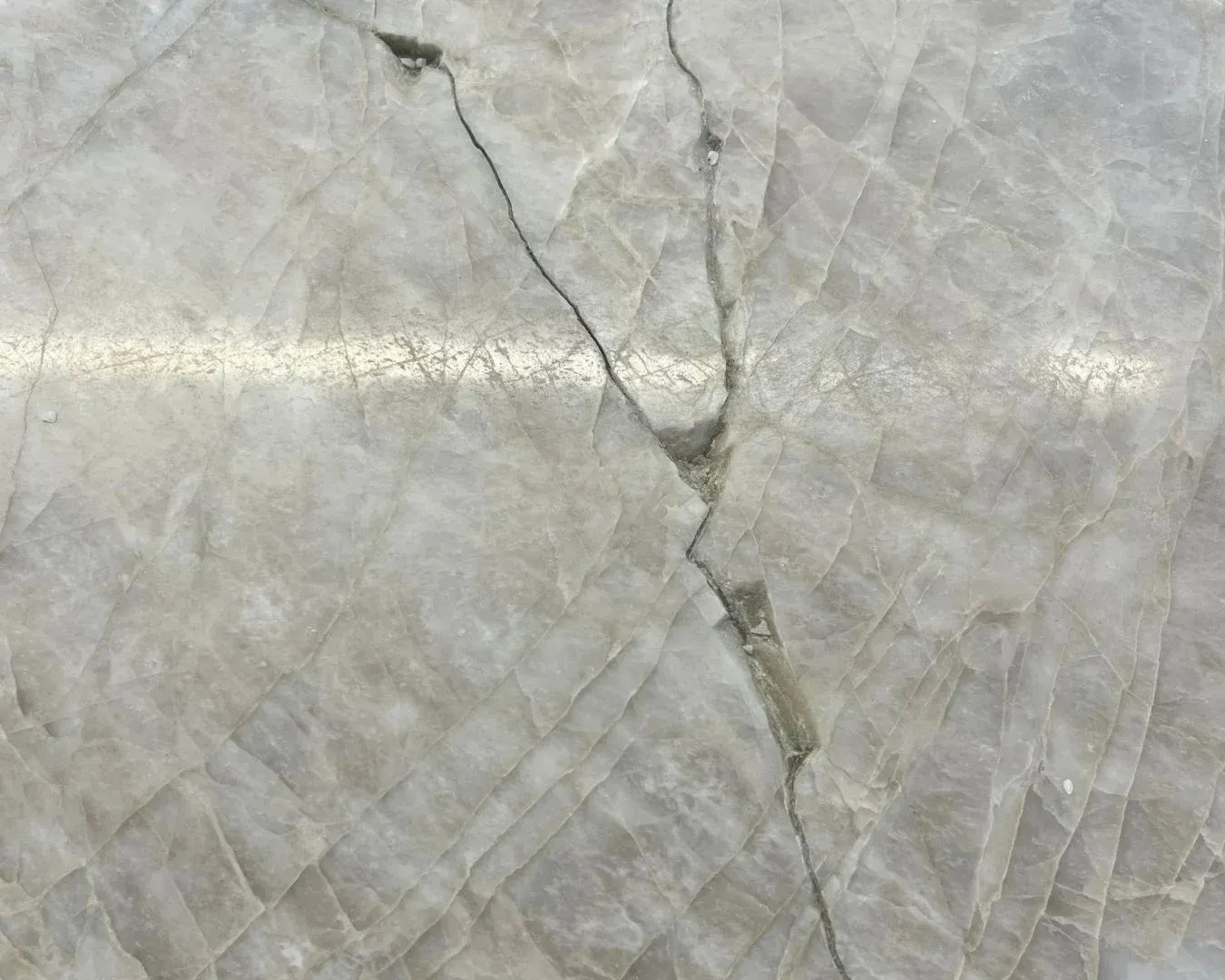
Most chips, holes, hairline cracks and many open cracks in marble, travertine and granite can be repaired with color-matched fills that are leveled and polished to blend in. Replacement makes more sense when the stone is loose, broken through, sinking, or when a crack keeps moving because of a problem underneath. A professional assessment tells you which case you are in before you spend money on new stone.
Common types of damage
- Chips on countertop edges, steps and tile corners
- Hairline cracks that show up as thin lines across a tile or slab
- Open cracks wide enough to catch dirt
- Holes and voids, very common in travertine
- Broken corners on floor tiles
When repair is the right call
Repair works well when the stone is still well bonded and stable. A typical stone damage repair cleans the damaged area, fills it with a material tinted to match the color and pattern of the stone, and then levels and polishes the repair flush with the surface. Done well, the repair is durable and very hard to spot, especially on stones with movement and veining.
Repair is also the practical choice when the stone is discontinued, part of a large slab or book-matched wall, or would require tearing out cabinets or fixtures to replace.
When replacement makes more sense
- The tile is loose or sounds hollow when tapped
- The piece is broken through and moves
- The crack keeps growing or reopening
- The floor is sinking or uneven around the crack
- There are signs of water under the stone
In these cases the cause has to be fixed first. Filling a crack over a moving substrate only hides the problem for a while.
What causes cracks in Florida homes
Settling of the slab, missing support under countertops, heavy impacts, and water getting under tiles are the usual causes. In Florida, moisture and older installations with poor coverage of thinset are frequent factors. One of our clients described how, during a bathroom restoration, water was found under the tiles and the area was drained and sealed before the work continued. Catching that early is part of a careful repair.
What to expect from a professional repair
- An honest evaluation of the cause and the options
- Protection of the surrounding area
- A color-matched fill suited to the stone and location
- Leveling once the material cures
- Polishing so the repair matches the finish around it
Many repairs are combined with floor polishing or countertop restoration, so the whole surface looks even when the work is done. See the crack repair before and after.
Frequently asked questions
Can a cracked marble countertop be repaired?
Often yes. Hairline and open cracks can be filled with color-matched material and polished, as long as the countertop is well supported and not moving.
Will a marble repair be visible?
A good repair blends into the color and pattern of the stone. On stones with veining it is usually very hard to see.
Can holes in travertine be filled?
Yes. Open holes and voids in travertine are filled and polished so the surface is smooth and easier to clean.