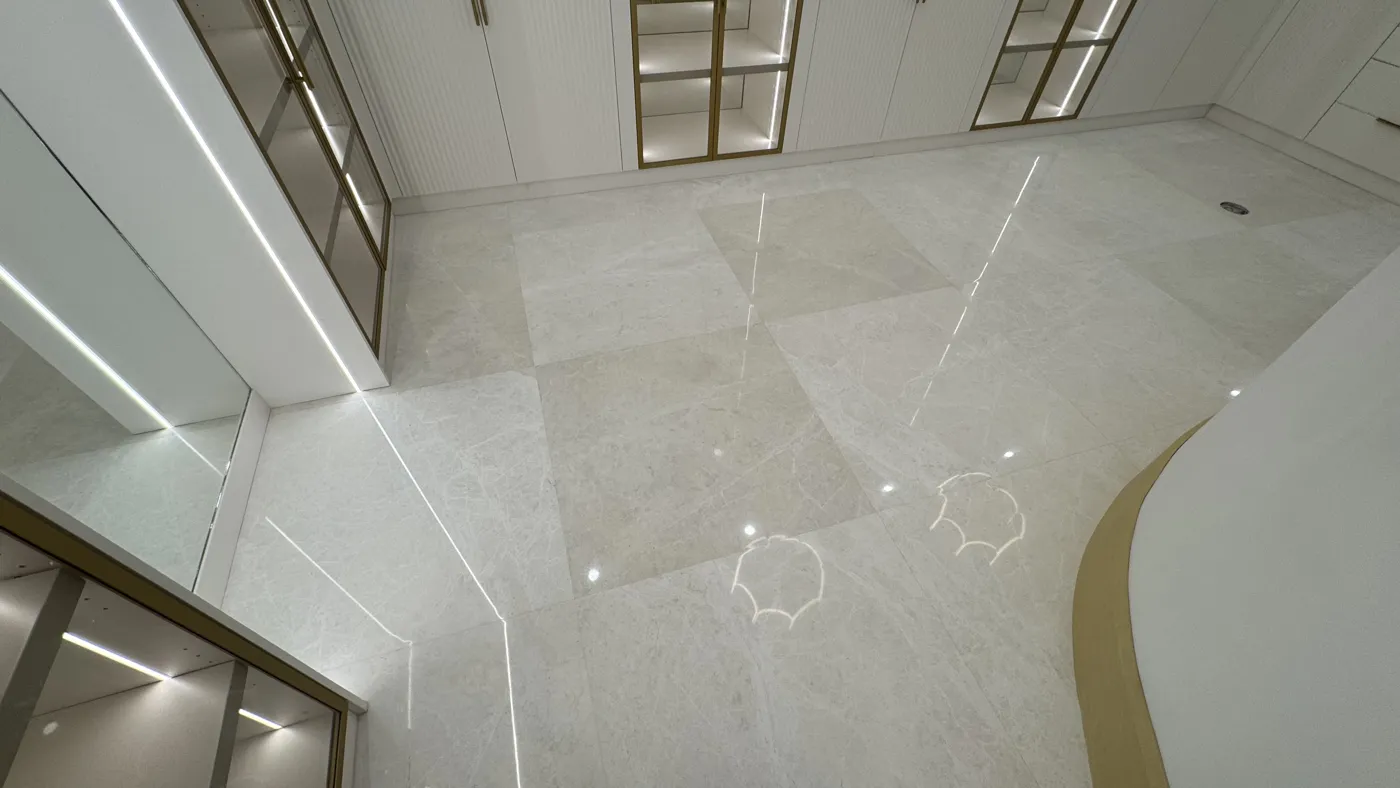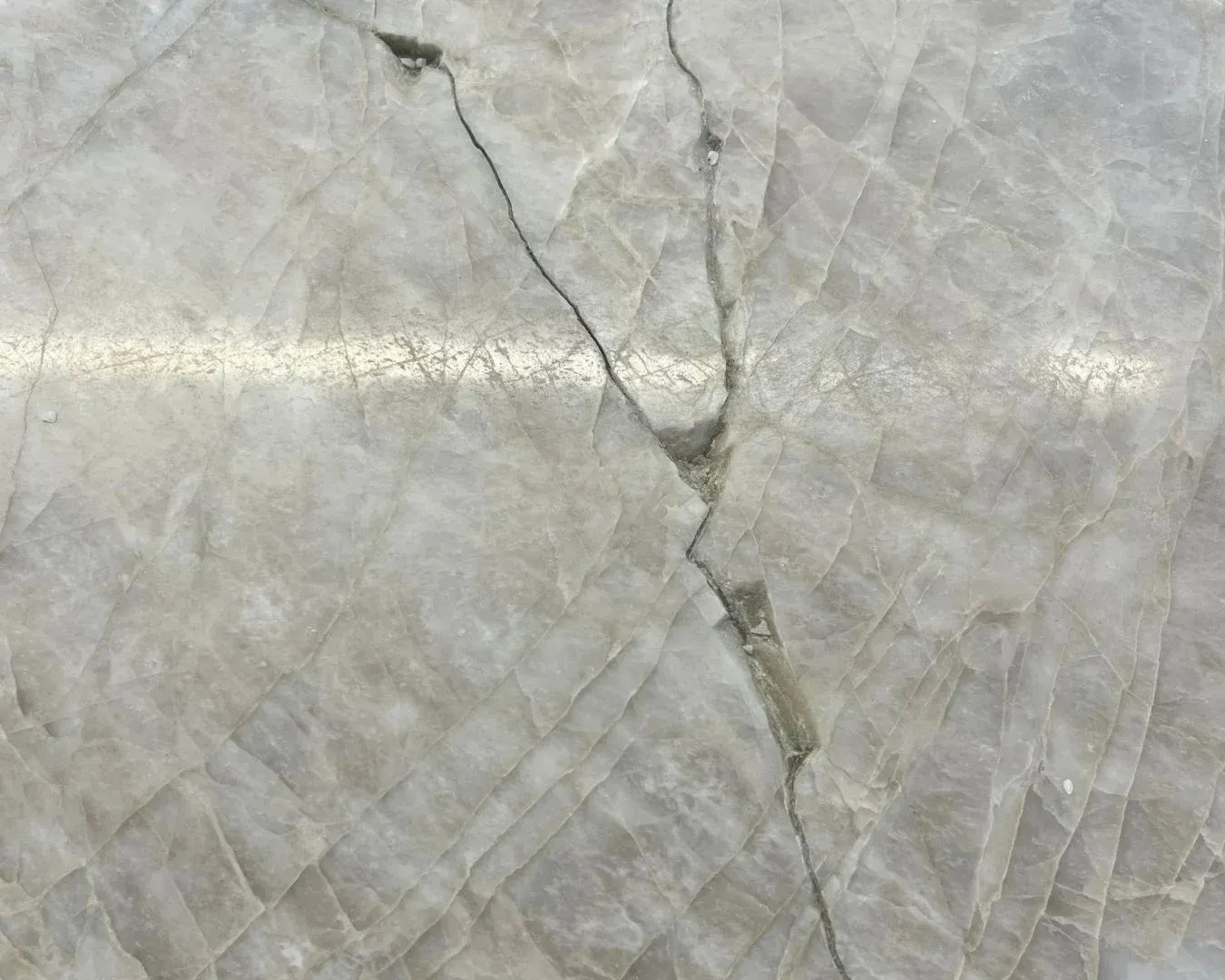
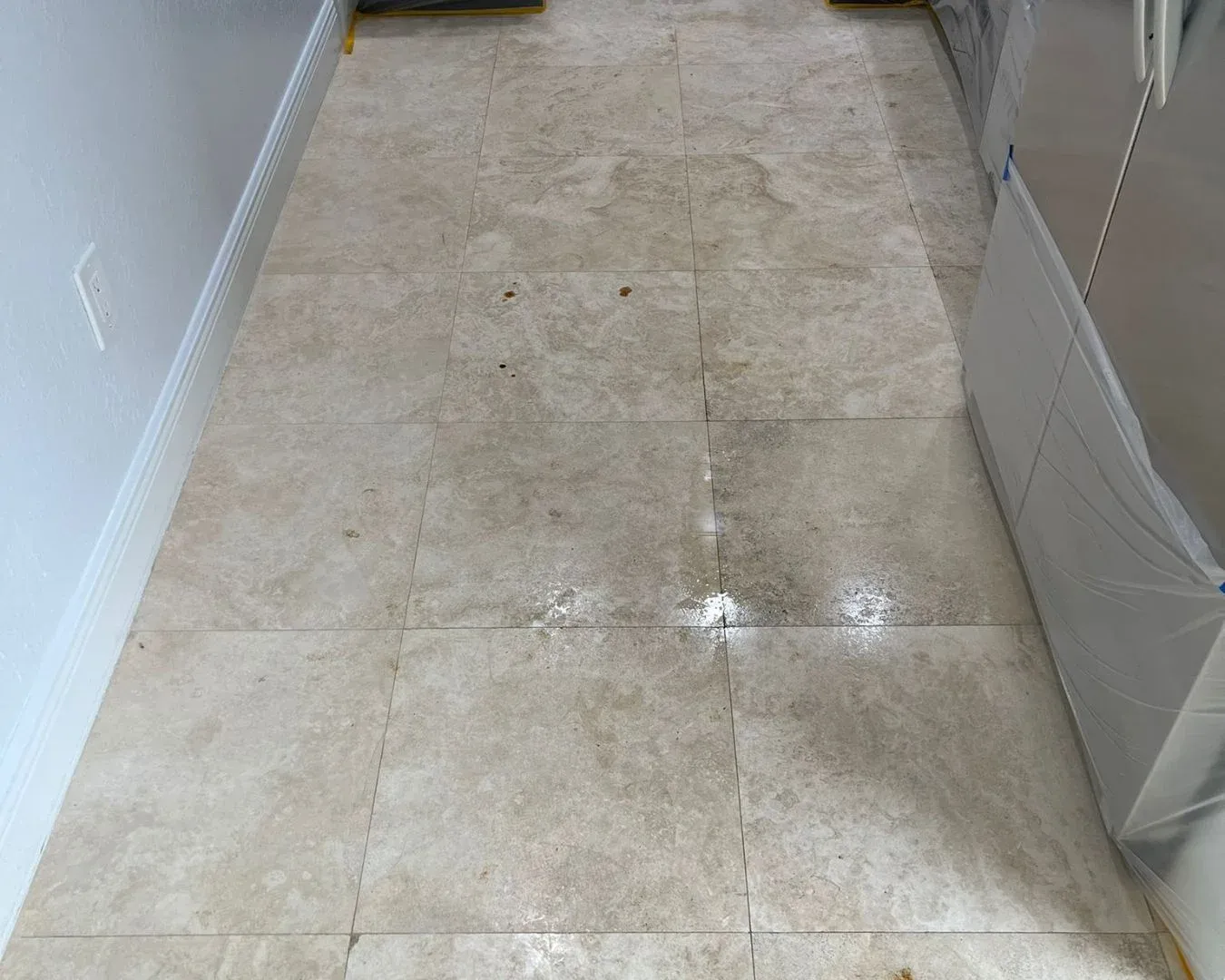
Etching is damage to the surface of the marble: a dull, lighter or rough spot left by acids like lemon, wine, vinegar or harsh cleaners. A stain is something that soaked into the stone and darkened or colored it. Etching is fixed by honing and polishing the surface. Stains are drawn out with a poultice or deep cleaning. Sealing helps against stains, but it does not prevent etching.
The 10-second test
Look at the mark from a low angle with light reflecting off the surface.
- If the spot looks dull, cloudy or lighter than the stone around it, and you can feel a slight roughness, it is almost always etching.
- If the spot is darker or colored (brown, yellow, gray or orange) and the shine looks the same as the rest of the surface, it is most likely a stain.
Etching changes the surface. A stain changes the color inside the stone. That single difference decides how each one is repaired.
What causes etching
Marble, travertine and limestone are calcium-based stones. Acids react with calcium and eat away a microscopic layer of the polished surface. Common sources in Florida homes:
- Lemon, lime, orange juice and other citrus
- Wine, tomato sauce, soda and coffee
- Vinegar-based and "all-purpose" bathroom and kitchen cleaners
- Pool chemicals tracked inside on wet feet
- Hard water deposits that people try to remove with descalers
Etching often looks like rings under glasses, drip marks next to the sink or dull paths in front of the shower.
What causes stains
Most natural stone is porous. Liquids that sit long enough soak in and leave color behind. The usual suspects are cooking oil, coffee, wine, rust from metal cans or furniture feet, water with minerals, and organic matter like leaves on outdoor stone. In humid South and Central Florida, mildew and algae also stain grout, porches and pool decks.
How etching is fixed
Because etching is surface damage, the surface itself has to be refinished. Light etching on a polished floor or countertop can sometimes be polished out. Deeper or widespread etching needs honing with diamond abrasives first, then polishing back to the finish you want. This is the core of our marble floor restoration and polishing and countertop restoration work.
Etch-removal powders sold online can help on very light marks, but on large areas they often leave an uneven, patchy shine. If the etching covers a whole path or countertop, professional honing gives a consistent result.
How stains are removed
Stains are pulled out of the stone, not polished off. The usual method is a poultice: a paste chosen for the type of stain (oil, organic, rust or water) that sits on the spot and draws the color out as it dries. Several applications may be needed. Organic and outdoor stains respond well to professional deep cleaning, which is part of our stone cleaning and sealing service.
Once the stain is gone, sealing the stone slows down the next one.
Why sealing does not stop etching
A penetrating sealer works inside the pores of the stone to slow down absorption, so it helps a lot against stains. Etching, however, is a chemical reaction on the surface, and sealers do not change the chemistry of marble. Even a perfectly sealed marble countertop will etch if lemon juice sits on it. The best protection against etching is wiping acids quickly, using coasters and trays, and cleaning with pH-neutral products made for stone.
When to call a professional
- The etching covers a large area, a full path or a whole countertop
- A stain came back after you tried to remove it
- You are not sure if the mark is etching, a stain or a coating problem
- The stone has both issues, which is very common on older floors
Look at the before and after projects to see what restoration can do, or send us a photo for an honest assessment.
Frequently asked questions
Can etching be removed from marble?
Yes. Light etching can often be polished out, and deeper etching is honed with diamond abrasives and then polished back to the original finish.
Does sealing prevent marble etching?
No. Sealers slow down stains by reducing absorption, but etching is a chemical reaction between acids and the stone's surface, which sealers do not stop.
Is a dark spot on marble a stain?
Usually. If the mark is darker or colored and the shine around it looks normal, it is most likely a stain that soaked into the stone.